Dental consent forms are an essential part of the dental treatment process. They serve as legal documentation that ensures both patients and healthcare professionals are on the same page regarding the dental procedures being performed. These forms outline the risks, benefits, and alternatives to the proposed treatments, allowing patients to make an informed decision about their oral health.
Dental Consent Form Samples

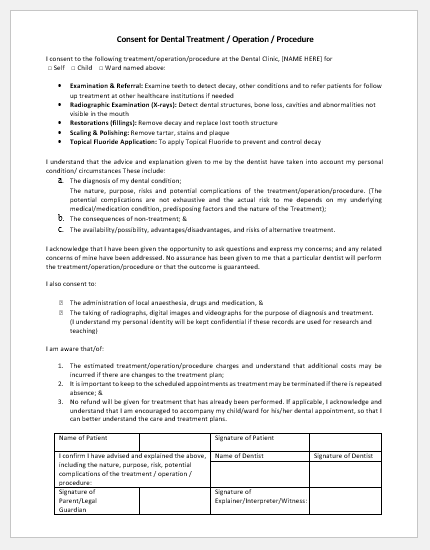 Another commonly used dental consent form template is the “Dentist Treatment Consent Form.” This template provides a more comprehensive consent document that covers various dental treatments. It includes sections for patient information, treatment details, risks, benefits, and alternative treatment options. This form template is available for download and can be customized to meet specific practice requirements.
Importance of Dental Consent Forms
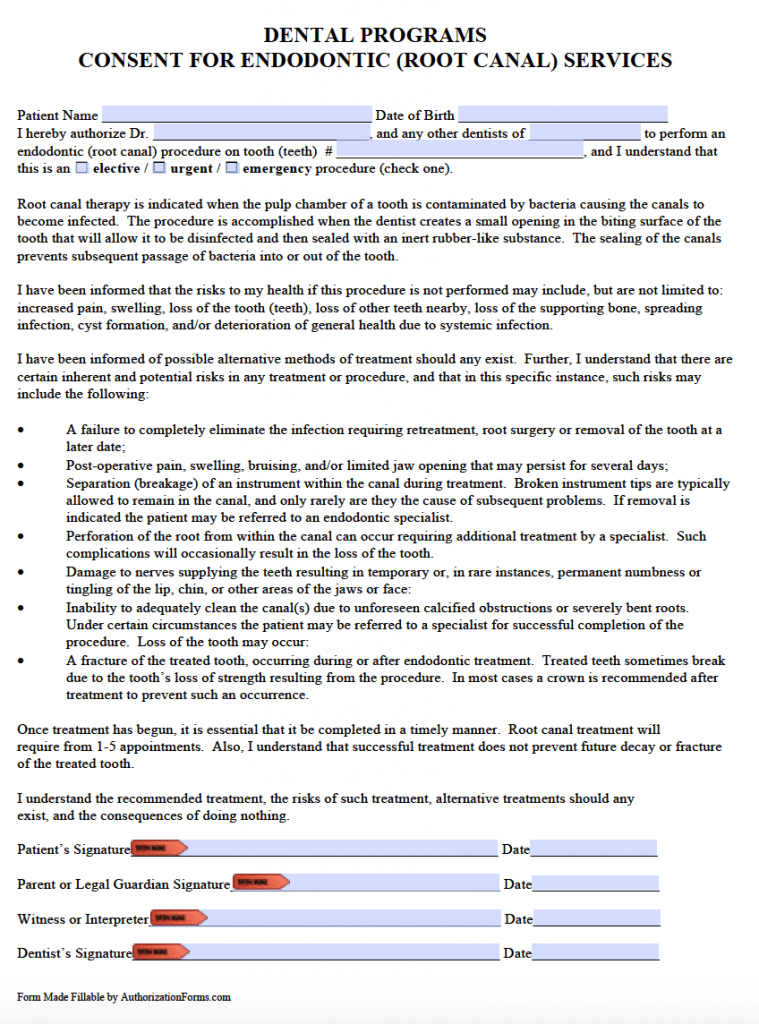 The use of dental consent forms is crucial in the field of dentistry. These forms protect the interests of both the patient and the dentist. By obtaining a patient’s informed consent, dental professionals ensure that patients understand the potential risks associated with the proposed treatment and have realistic expectations about the outcomes.
Dental consent forms also serve as evidence that the patient was informed about the treatment options, risks, and benefits discussed during the consultation. This documentation helps safeguard healthcare providers in the event of any legal disputes or allegations of negligence.
Patients benefit from dental consent forms as they empower them to make autonomous decisions about their oral health. These forms provide information on the treatment process, potential complications, and alternative options, allowing patients to weigh the pros and cons before giving their consent. By signing these forms, patients acknowledge their understanding of the risks involved and their agreement to proceed with the recommended treatment.
How to Use Dental Consent Forms
 Using dental consent forms in practice is a straightforward process. When a patient comes in for a consultation, it is the dentist’s responsibility to explain the proposed treatment plan, including associated risks, potential benefits, and available alternatives. The dentist should answer any questions or concerns the patient may have and provide all necessary information.
Once the patient understands the treatment plan, they can review the consent form to ensure they are comfortable proceeding with the proposed dental procedures. The patient then signs the form, indicating their consent, and a copy of the signed document is kept in the patient’s dental records for reference.
Dental consent forms play a vital role in promoting transparency, accountability, and patient-centered care. They ensure that dental professionals and patients are in agreement regarding the treatment plan, ultimately supporting ethical dental practice and patient satisfaction.
Conclusion
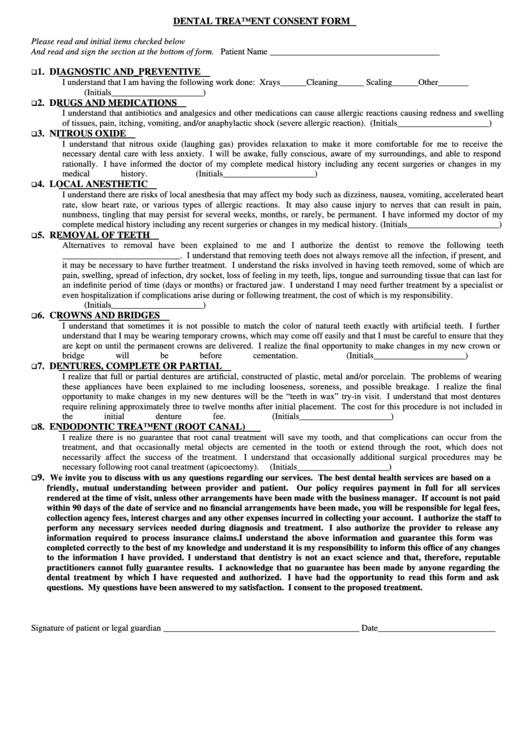 Dental consent forms are essential documents that protect the rights of both patients and healthcare professionals. These forms provide patients with the necessary information to make an educated decision about their dental treatment. Dentists and dental practitioners rely on consent forms to obtain informed consent and to document that the patient understood the potential risks and benefits associated with the proposed procedures.
Various dental consent form templates are available for download, ensuring that dental professionals can find one that best suits their practice and treatment offerings. By adhering to professional guidelines and obtaining consent through these forms, dental professionals can ensure that the treatment process is transparent, patient-centered, and legally responsible.
It is essential for dental practices to prioritize the use of dental consent forms to establish a strong foundation of trust and open communication with their patients. These forms reinforce the dentist-patient relationship and provide patients with peace of mind, knowing that their choices regarding their oral health are respected and supported by their dental healthcare providers.
