The military phonetic alphabet is a system used to represent letters and numbers with specific words or phrases. It is often used in military, police, and NATO communications to ensure clear and accurate communication, especially in situations where noise or interference may make verbal communication difficult.
Military Alphabet Chart
Here is a Military Alphabet Chart that you can use as a reference:
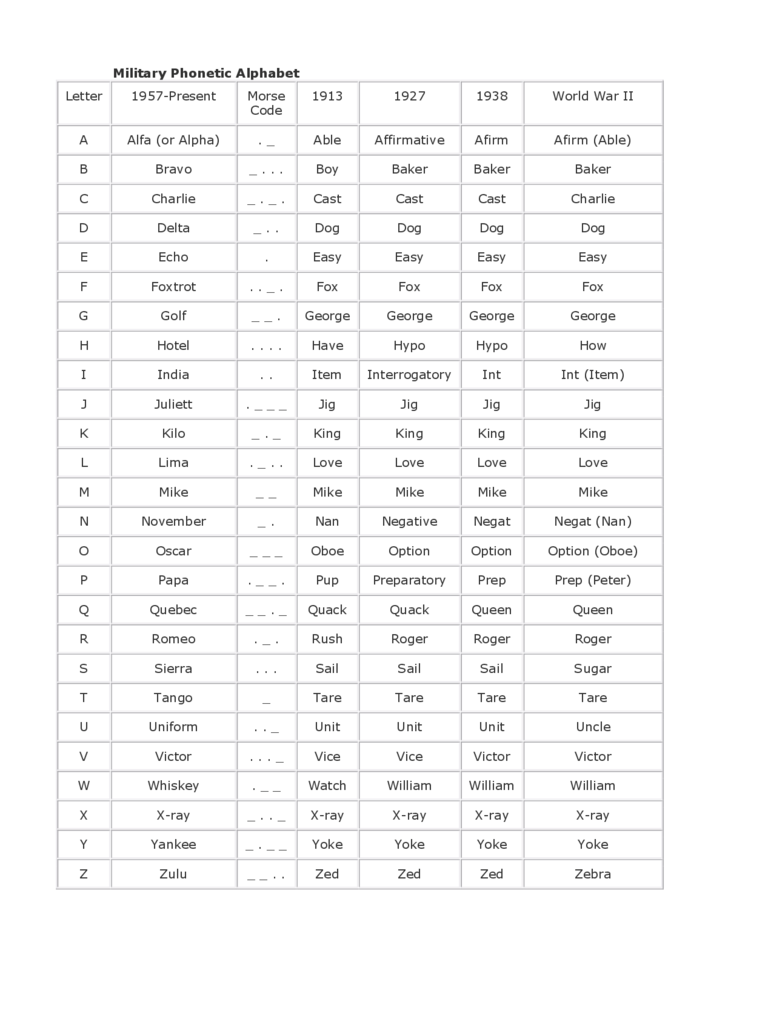 This chart provides you with the phonetic representation for each letter in the English alphabet. It is especially useful when spelling out words or providing instructions over the radio or telephone.
Understanding the Phonetic Alphabet
The military phonetic alphabet assigns a unique word or phrase to each letter. For example, instead of saying “A” over a radio, you would say “Alpha.” This helps to prevent confusion, as certain letters can sound similar in noisy or stressful situations.
Here are a few examples of how the military phonetic alphabet is used:
- Instead of saying the word “Bravo,” you would say “B” to represent the letter B.
- Instead of saying the word “Charlie,” you would say “C” to represent the letter C.
- Instead of saying the word “Delta,” you would say “D” to represent the letter D.
Importance of the Military Phonetic Alphabet
The military phonetic alphabet is an essential tool in ensuring effective and accurate communication in various situations. Here’s why:
1. Clarity: The use of standardized words or phrases for each letter eliminates any confusion that may arise from similar-sounding letters.
2. Accuracy: By using the phonetic alphabet, there is less room for error when conveying critical information, such as coordinates or names.
3. Consistency: The phonetic alphabet is universally recognized and used by military forces, police departments, and NATO. This consistency allows for seamless communication between different agencies and organizations.
Learning the Phonetic Alphabet
Learning the military phonetic alphabet can be a fun and educational experience. It’s a great way to improve your communication skills and expand your knowledge. Here are a few tips to help you get started:
1. Practice: Take the time to practice saying each letter and its corresponding word. Repeat them out loud until you feel comfortable with the pronunciation.
2. Visual aids: Utilize resources such as the military alphabet chart mentioned earlier. Having a visual representation of the phonetic alphabet can help reinforce your learning.
3. Use it in everyday life: Challenge yourself to use the military phonetic alphabet when spelling out words or providing instructions to others. This will help you become more familiar with the system.
Conclusion
The military phonetic alphabet is a valuable tool that ensures effective communication in various professional fields. Whether you are in the military, a police officer, or part of NATO, understanding and using the phonetic alphabet can make a significant difference in your ability to convey information accurately and efficiently. Take the time to familiarize yourself with the alphabet and practice using it whenever possible. Clear and concise communication is vital, especially in high-stakes situations, and the military phonetic alphabet helps achieve just that.
