Mathematics can sometimes be a daunting subject for students, but it doesn’t have to be! With the help of the Eight Mathematical Practices, students can develop a strong foundation in math and become confident problem solvers. These practices are designed to provide students with the necessary skills and strategies to excel in mathematics.
Practice 1: Make sense of problems and persevere in solving them
One of the key aspects of being successful in math is the ability to understand and analyze problems. Students are encouraged to break down complex problems into smaller, more manageable parts and then work through them systematically. By persevering through challenges, students build resilience and develop problem-solving skills that can be applied to various situations in life.
 Image source: Pinterest
Practice 2: Reason abstractly and quantitatively
In order to excel in mathematics, students need to be able to think abstractly and make sense of mathematical concepts. This practice encourages students to analyze and understand the quantitative aspects of problems, allowing them to apply mathematical reasoning to solve real-world problems.
 Image source: Pinterest
Practice 3: Construct viable arguments and critique the reasoning of others
Mathematics is not just about finding the right answer; it also involves being able to justify and explain your reasoning. This practice encourages students to construct logical and coherent arguments to support their solutions. Additionally, students learn to critique the reasoning of others, developing their ability to evaluate mathematical arguments and identify potential errors.
 Image source: Pinterest
Practice 4: Model with mathematics
Mathematical modeling is an essential skill that enables students to apply mathematical concepts to real-life situations. By using mathematical models, students develop the ability to analyze and solve complex problems in various fields, such as engineering, finance, and science. This practice emphasizes the importance of connecting mathematics to the real world.
 Image source: Pinterest
Practice 5: Use appropriate tools strategically
Mathematics is not just about numbers and equations; it also involves using various tools and technologies to solve problems. This practice encourages students to choose and use appropriate tools strategically, such as calculators, graphing software, and manipulatives. By utilizing these tools effectively, students can enhance their understanding and problem-solving abilities.
 Image source: Pinterest
Practice 6: Attend to precision
Precision is crucial in mathematics as even a small mistake can lead to incorrect solutions. Students are encouraged to pay close attention to detail and be precise in their reasoning and communication. By developing this practice, students become more accurate in their mathematical thinking and avoid common errors.
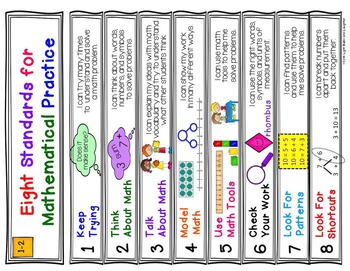 Image source: Teachers Pay Teachers
Practice 7: Look for and make use of structure
Mathematics is built upon various structures and patterns. This practice encourages students to recognize and utilize the underlying structure of mathematical problems. By identifying patterns and structures, students can make connections between different mathematical concepts and develop a deeper understanding of the subject.
 Image source: Math Coach’s Corner
Practice 8: Look for and express regularity in repeated reasoning
Mathematics often involves solving problems that have regular patterns or structures. This practice encourages students to identify these regularities and express them in a systematic way. By doing so, students can streamline their problem-solving strategies and develop more efficient methods of solving mathematical problems.
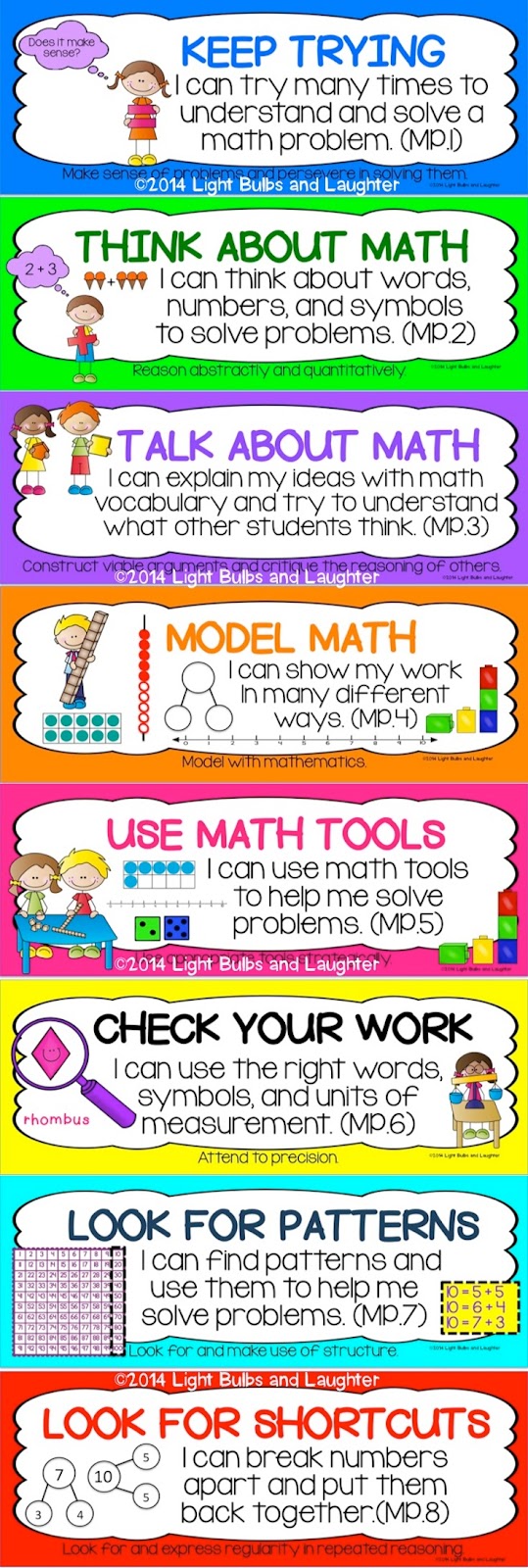 Image source: Blogspot
By incorporating these Eight Mathematical Practices into their learning, students can develop a strong foundation in mathematics and become proficient problem solvers. These practices not only promote deeper understanding but also encourage critical thinking, reasoning, and application of mathematical concepts.
If you’re looking for educational resources and materials to support these practices, check out the printable posters and examples available online. These resources can serve as a visual reminder of the Eight Mathematical Practices and help students stay engaged and motivated in their math learning journey.
Remember, math is not just about solving equations and crunching numbers; it is a powerful tool that can be used to understand and solve problems in the real world. So embrace the Eight Mathematical Practices and empower your students to become confident mathematicians!
 Image source: Pinterest
 Image source: Pinterest
